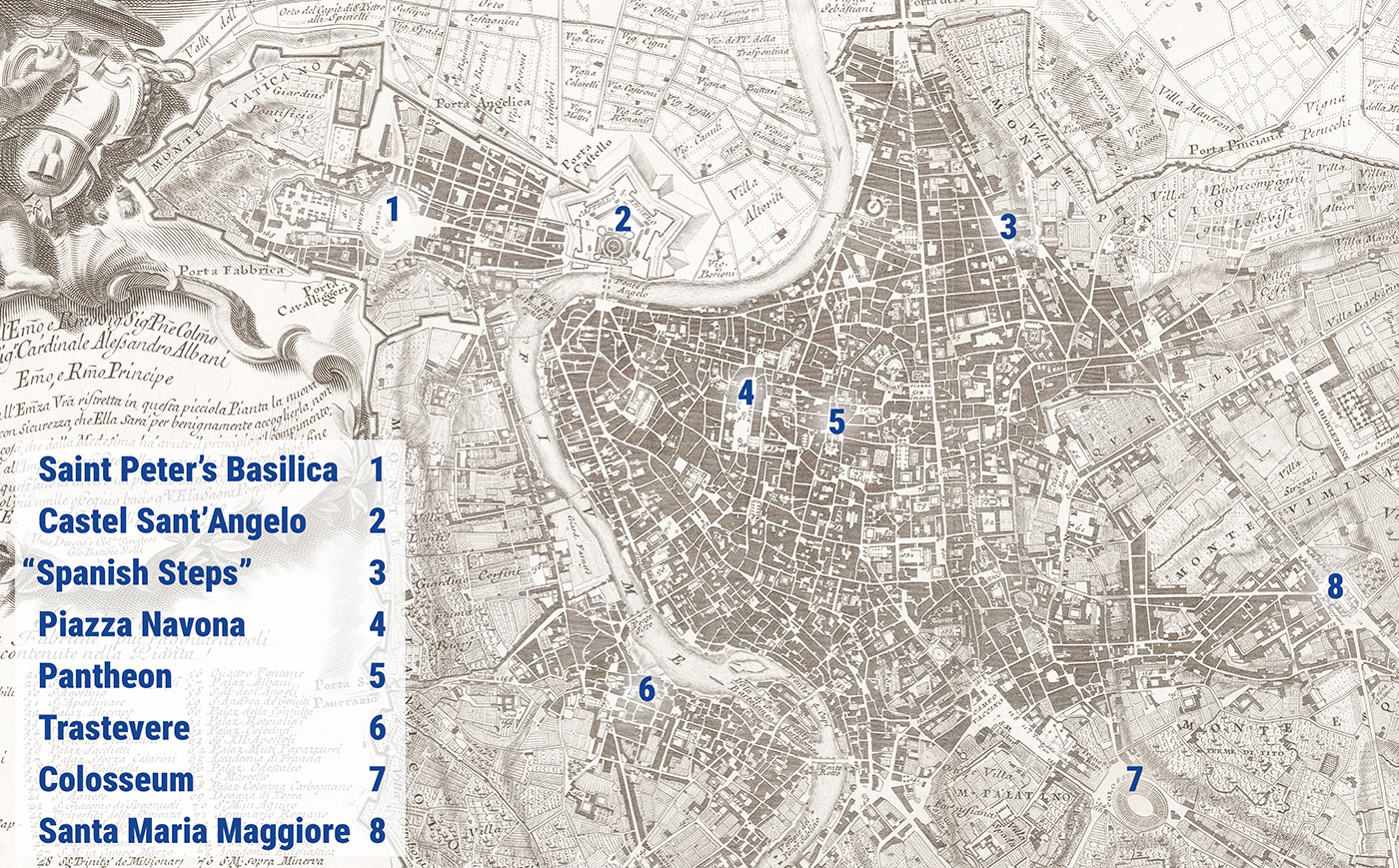
“I need to produce great ideas, and I believe that if I were commissioned to design a new universe, I would be mad enough to undertake it.”
—Attributed to Piranesi
An important tastemaker in the rise of Neoclassicism and Romanticism, Piranesi spread his ideas in multiple ways. In doing so, he often took creative, even spectacular, liberties with the fanciful yet awe-inspiring and sublime images he produced.
This exhibition showcases a selection of Piranesi’s artistic output and contextualizes the work within the important cultural debates of his time. The prints, drawings, and a recently acquired sculpture are arranged roughly chronologically in thematic sections. They highlight Piranesi’s visionary ideas about antiquity, his role as a printmaker and antiquities dealer, his understanding of an artist’s role in history, and his conception of the relationship between nature and culture.
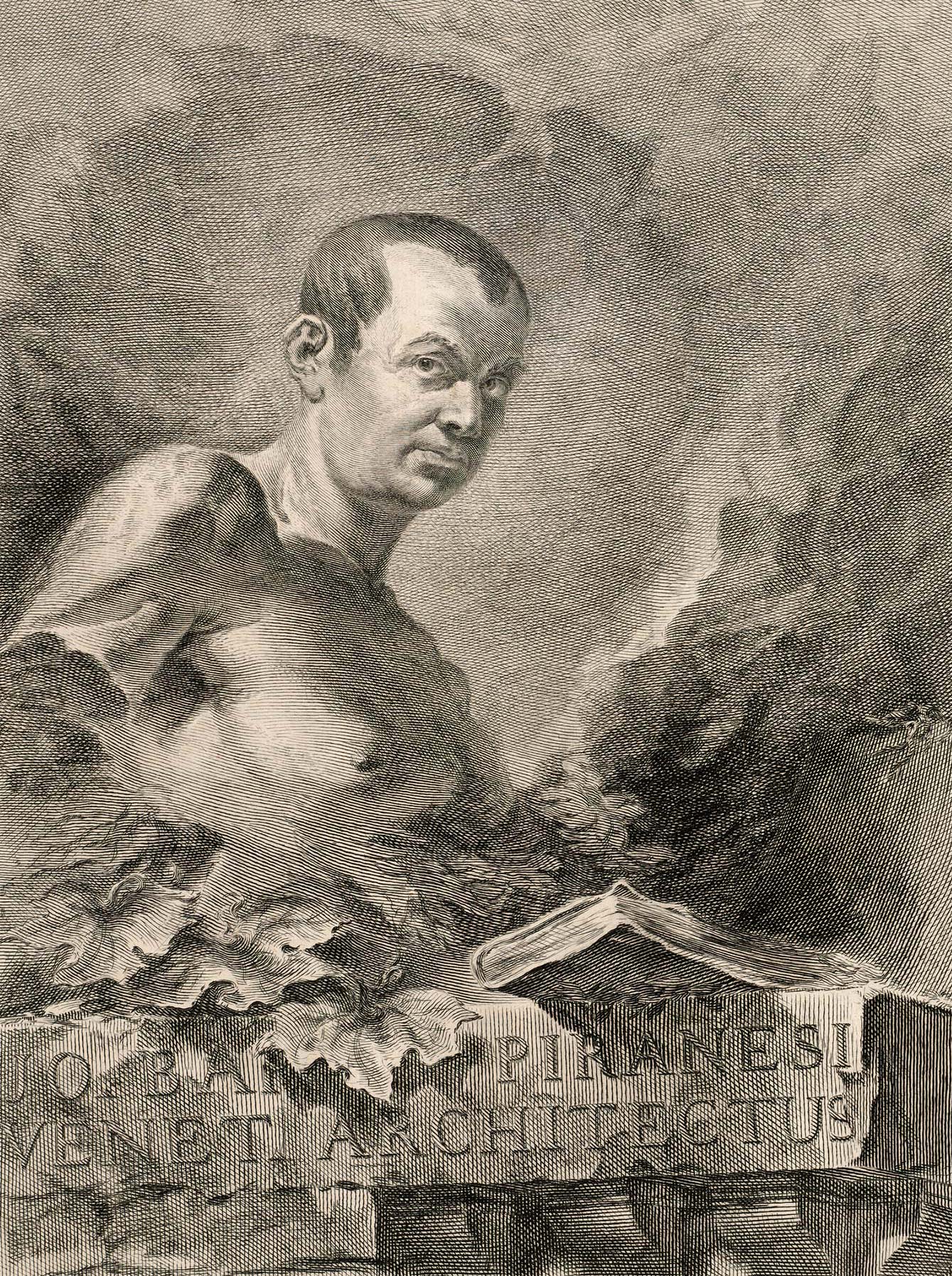
Felice Francesco Polanzani
Italian, 1700–1783
Portrait of Giovanni Battista Piranesi, 1750
Frontispiece of Opere varie di architettura … [Various Works of Architecture …]
Etching and engraving on paper
Image: 15 3/16 x 11 3/8 inches (38.6 x 28.9 cm)
Loan from Yale University Art Gallery,
The Arthur Ross Collection
Click or tap image to enlarge
Resembling a living Ancient Roman bust, Piranesi’s likeness looms over the viewer, employing the low-angle perspective that he often used in his architectural prints. The inscription “Venetianus architectus” identifies him as a Venetian, signaling his native pride, and indicates that he viewed himself first and foremost as an architect. The print served as the frontispiece of Piranesi’s Opera varie di architettura… [Various Works of Architecture…], a collection of architectural prints, including some inventive views of Ancient Rome.
Maya Dolan ’28
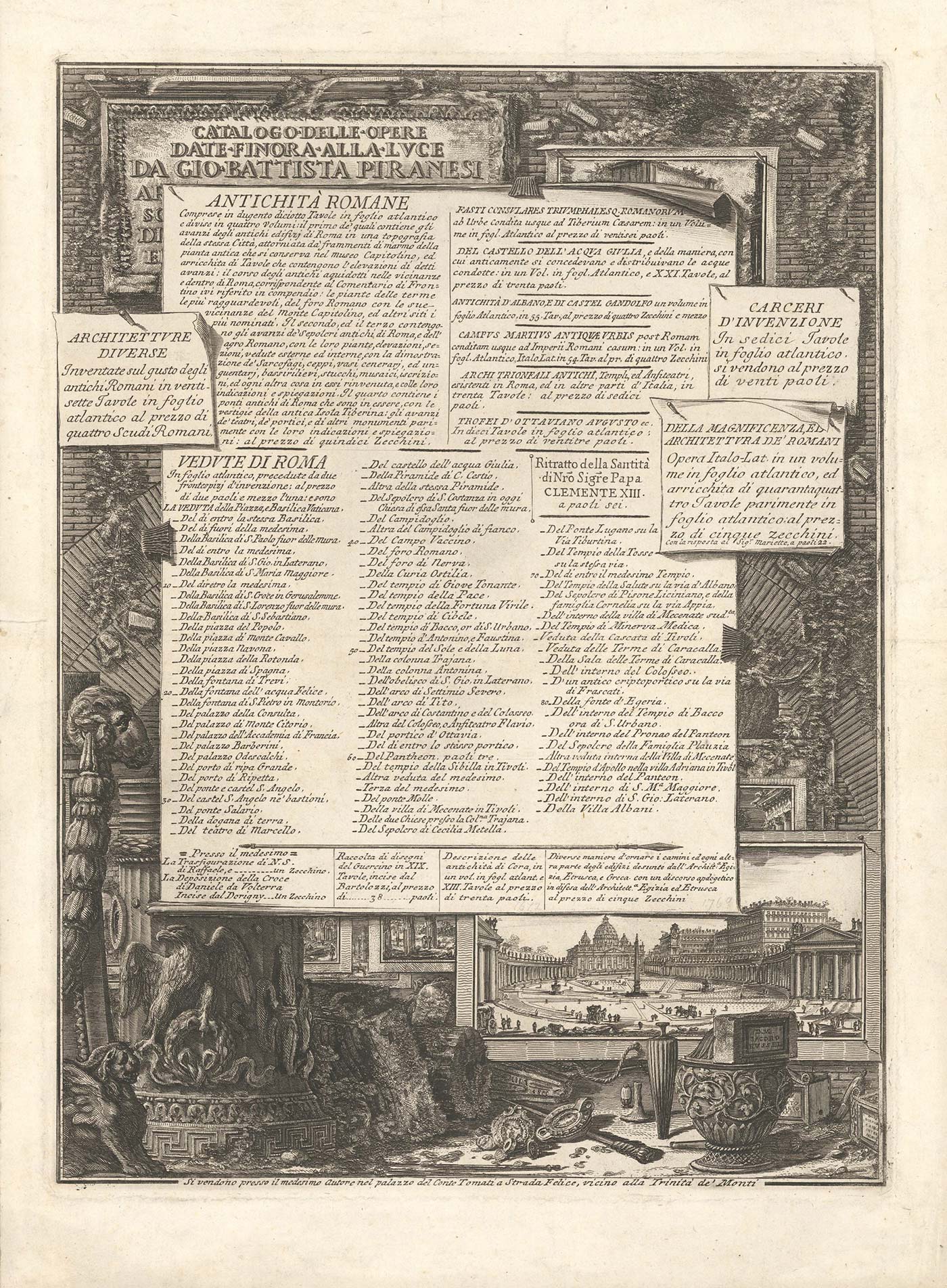
Catalogo delle opere … [Catalog of Works … ], c. 1769
Etching on paper
Image size: 15 7/8 x 11 3/4 inches (40.3 x 29.8 cm)
Purchase with funds provided by Jane and Raphael Bernstein
Click or tap image to enlarge
To promote his work, Piranesi published a catalog of the prints and publications he had available for sale. Piranesi added trompe l’oeil pieces of paper seemingly pinned onto the sheet. The background features Ancient Roman brickwork and a view of St. Peter’s Basilica, giving prospective buyers a taste of Piranesi’s artistic abilities.
Piranesi started the catalog in 1761 and updated it throughout his career. The version featured here, dated by its last entry of the Vedute di Roma [Views of Rome], was printed in 1769. The final version, completed posthumously by Piranesi’s son Francesco, totals 135 vedute.
Farren Stainton ’28
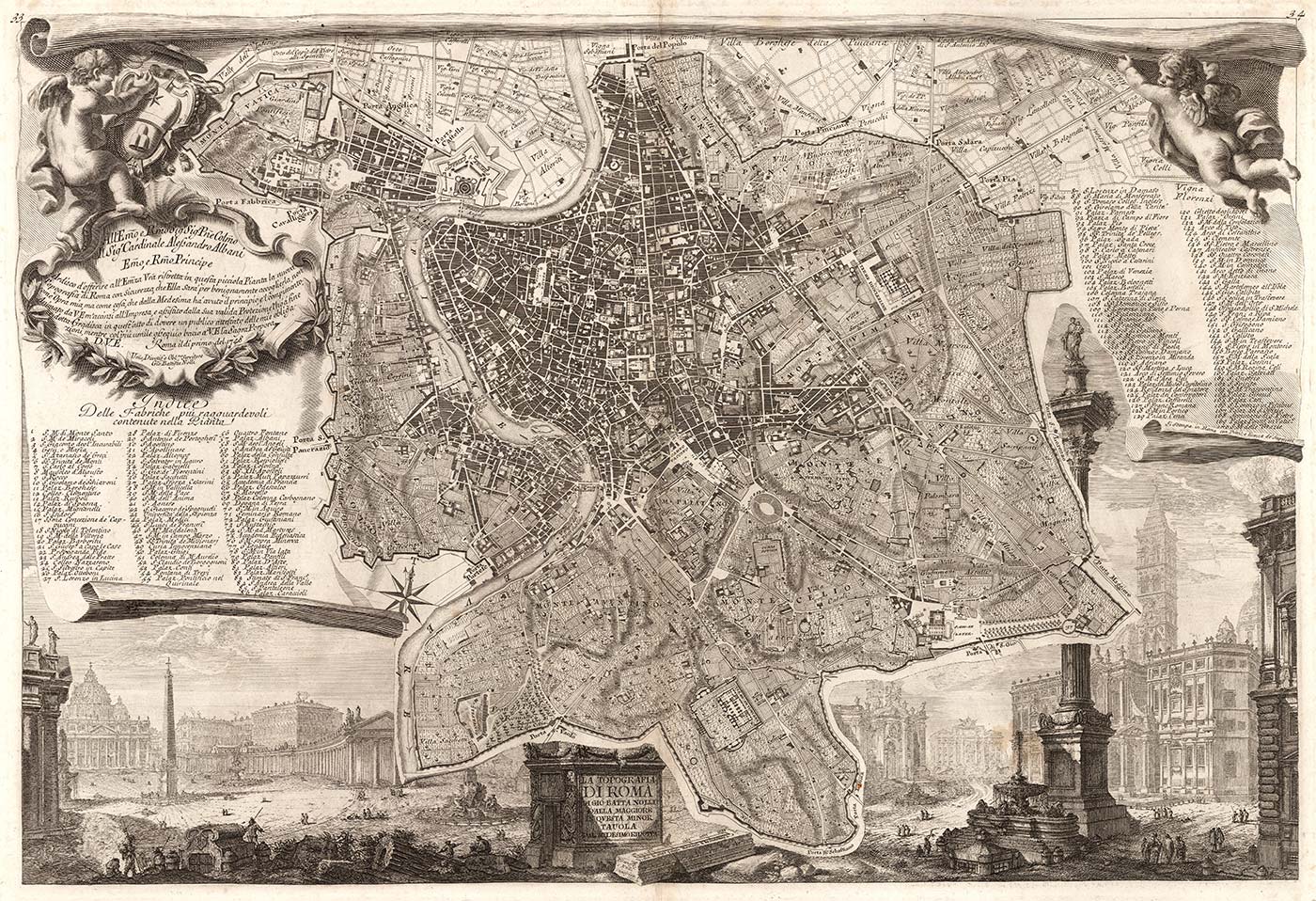
Carlo Nolli
Italian, 1724–c. 1770
With Giovanni Battista Piranesi
“Pianta piccola,” [“Small Map”], 1748
From La nuova topografia di Roma di Giovanni Battista Nolli … [The New Topography of Rome by Giovanni Battista Nolli …]
Engraving on paper
Image: 18 1/2 x 27 inches (47 x 68.5 cm)
Loan from Special Collections & Archives, Middlebury College
Purchase with funds provided by Ellen and Chris Lovell in memory of Peter Lovell, architect
Click or tap image to enlarge
In 1748, Giovanni Battista Nolli (1701–1756) published a large innovative map of Rome. It resulted from surveying (as opposed to from sketching), featured the city in plan (as opposed to in perspective), and showed the interiors of public buildings. Nolli’s publication included a reduced version of the map, the “Pianta piccola,” created by Nolli’s son Carlo, who scaled the map, and Piranesi, who provided the city views and the trompe l’oeil cartouches for the legends, keys, and texts.
Even though Rome’s shrinkage had been reversed during the sixteenth century, by Piranesi’s time the city consisted of what is now called the historical center: the old Campus Martius, the area around the Vatican, and Trastevere. Many ancient ruins still stood isolated in what had become pastures.